
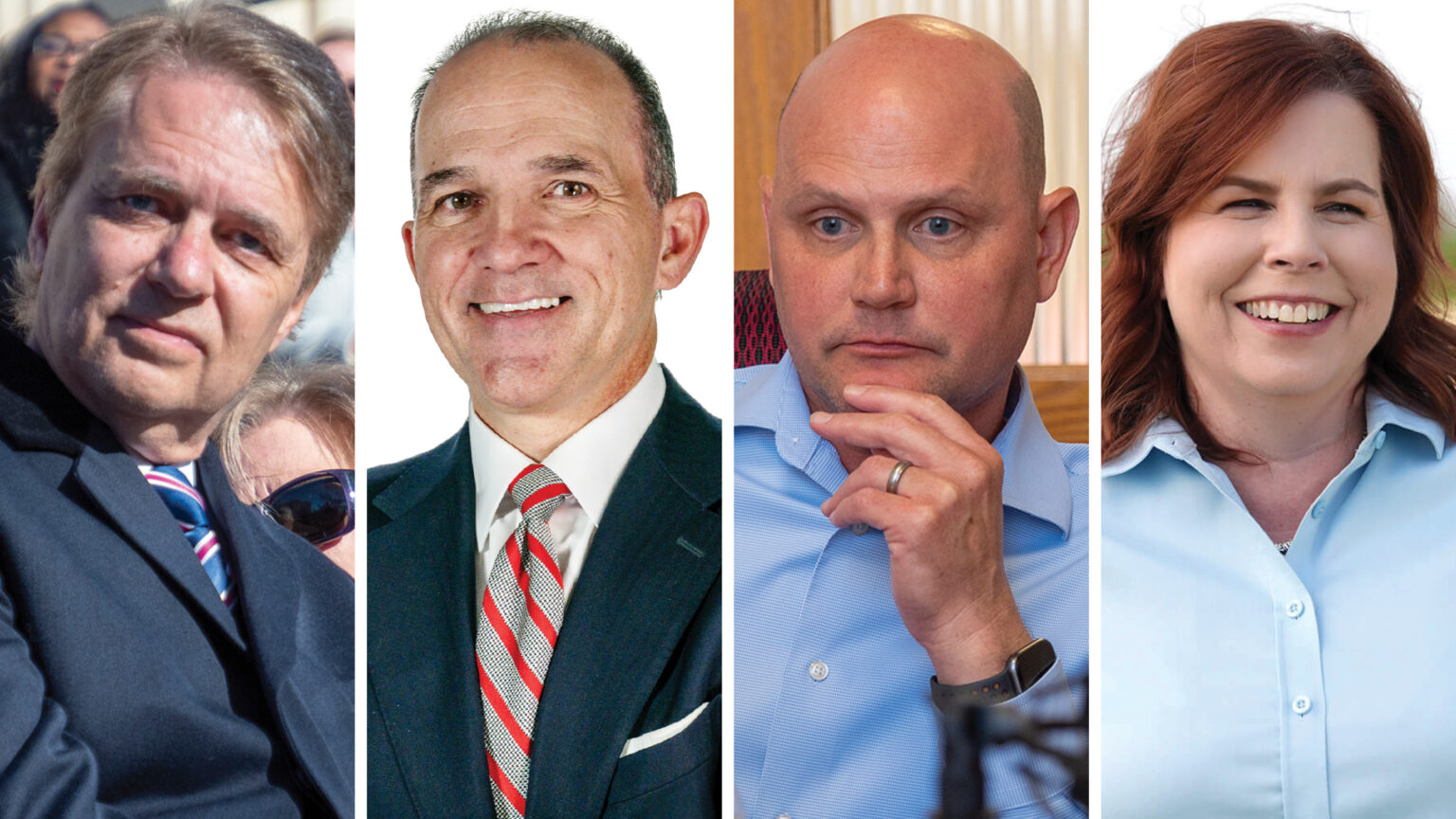
Democrats eschew loans, but that can change before August primary
By Tim Carpenter
TOPEKA — Four candidates for Kansas governor loaned their campaigns at least $1 million to bolster the bottom line on year-end finance reports and support claims of political momentum eight months from the August primary election.
Former Gov. Jeff Colyer started his campaign with a $50,000 loan in May and followed with three loans in December to push his personal commitment to $1.05 million at the end of the reporting period Dec. 31. He raised an equivalent amount from donors, his report said, and had $1.8 million in cash after expenses.
“Matching that support personally shows I’m fully committed to winning this race and delivering results for Kansas again,” said Colyer, who was governor from 2018 to 2019 after resignation of Gov. Sam Brownback.
Businessman Philip Sarnecki, with no previous experience in electoral politics, personally loaned his campaign a jaw-dropping $2 million. That left $2.3 million in his account — the largest cash-on-hand total of any 2026 candidate for governor.
“Our campaign has raised the most money in Kansas gubernatorial history and we did it in far less time than every other Republican candidate in the field,” Sarnecki said. “There’s an incredible energy around our campaign. Kansans are tired of losing and they’re tired of career politicians.”
Scott Schwab, the Kansas secretary of state, loaned his campaign $1.045 million. Overall, Schwab raised $1.4 million, spent $365,000 and held $1.05 million cash-in-hand.
The million-dollar club included Joy Eakins, a former Wichita school board member who loaned herself an even $1 million. She raised $1.1 million overall and spent $116,000. Eakins said the United States was on the cusp of a “golden age” under President Donald Trump, but Kansas could miss out on that good fortune if it failed to elect a conservative governor.
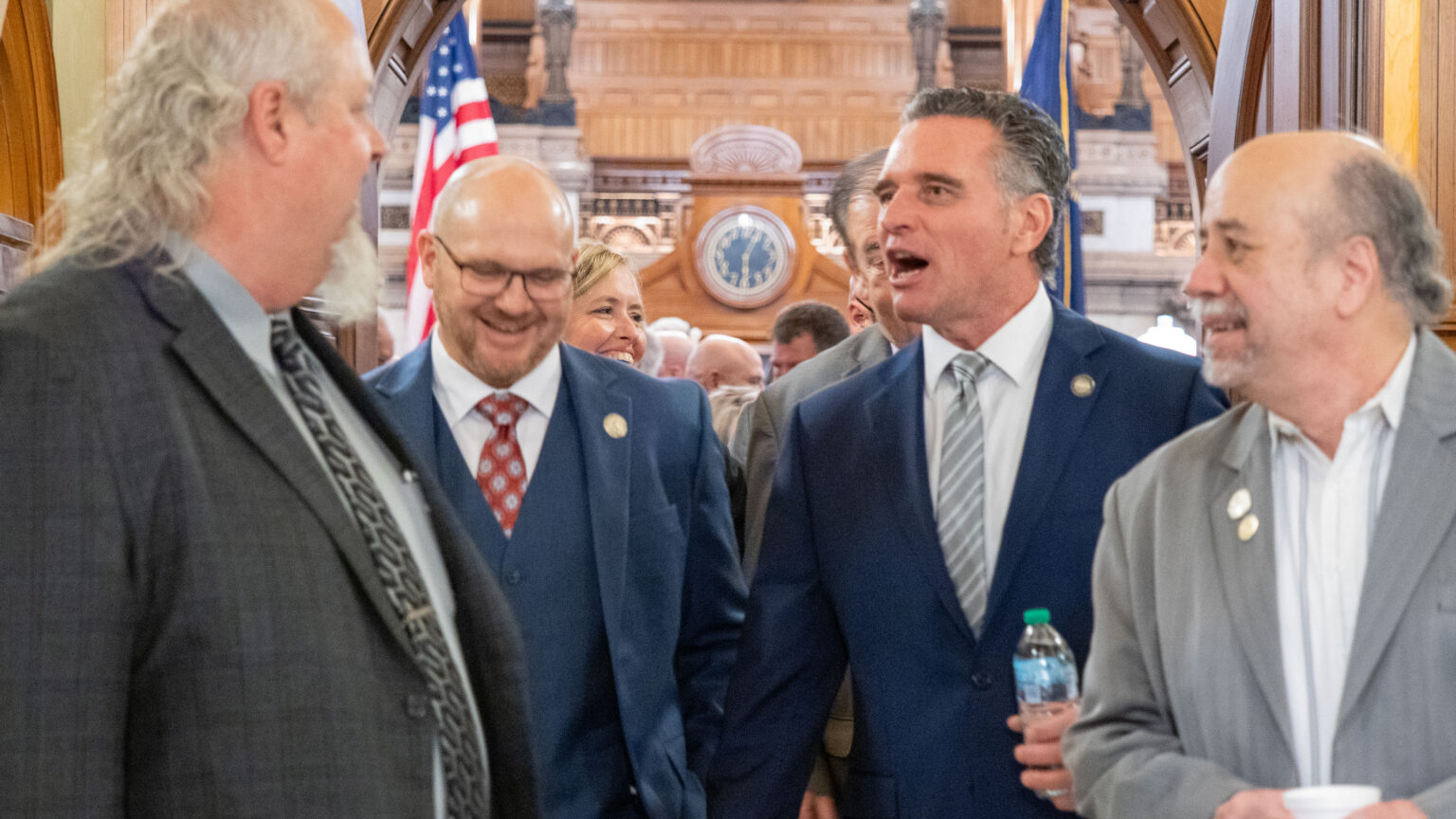
Other borrowers
Former Johnson County Commission member Charlotte O’Hara approved a personal loan of $485,000 to her campaign. At year’s end, she had $510,000 in her gubernatorial account.
State Insurance Commissioner Vicki Schmidt, a former Topeka state senator, loaned herself $81,500 and closed the year with $928,000 in cash. She said she was grateful for “confidence Kansans are placing in this campaign — and we’re just getting started.”
Kansas Senate President Ty Masterson of Andover didn’t make a loan to his campaign in 2025. He ended the year with $687,o00 in his account, which was less than five of his GOP competitors.
Masterson said nearly all of his donations arrived in the final three months of 2025 after he overhauled his campaign staff by dropping Axiom Strategies and hiring consultants more closely aligned with Trump. He said his nonprofit organization Take Back Kansas, which didn’t have to identify donors, entered 2026 with $700,000 in its account.
“We’re building a movement of everyday Kansans who are fed up with being taxed to death and watching their state fall behind,” Masterson said.
In the Democratic Party’s race for the gubernatorial nomination, neither Sen. Ethan Corson nor Sen. Cindy Holscher, both of Johnson County, made loans to their campaigns. Holscher raised $397,000 and had $179,000 at end of the year. Corson reported contributions of $902,000 during 2025, but had $526,000 in cash on Dec. 31.
“That’s one of the largest hauls for any non-incumbent Democrat running for governor in Kansas history,” Corson said in a fundraising appeal. “That’s why I am the only candidate in this race who has what it takes to go toe-to-toe with extremist Republicans and their large fundraising hauls.”
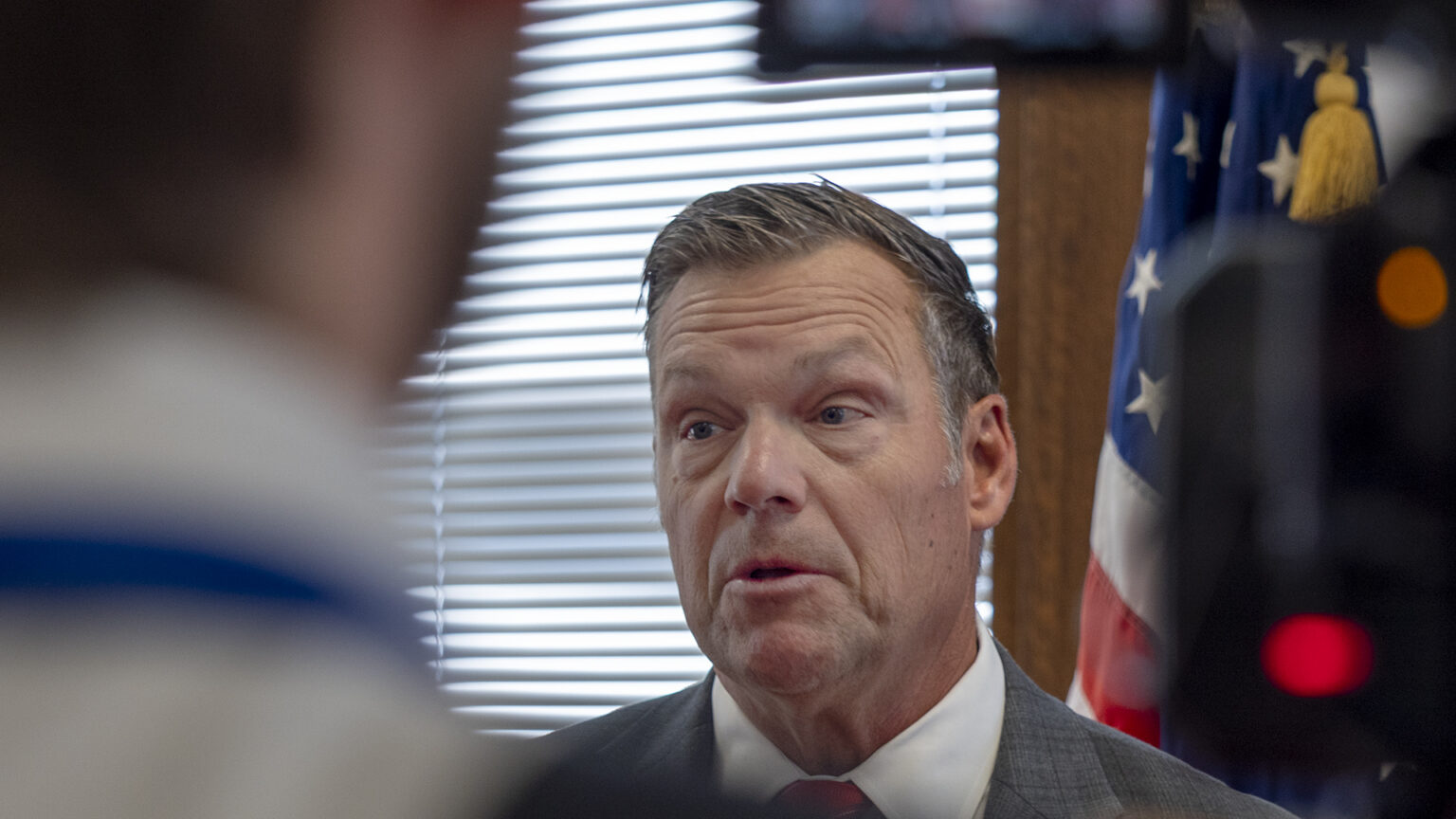
Attorney general contest
In the campaign for attorney general, incumbent Republican Kris Kobach of Lecompton began 2025 with $217,000 in his campaign account. He added $337,000, spent $52,000 and reported cash of $502,600 at the close of 2025. He said the previous high in terms of cash-on-hand at this juncture of a Kansas campaign for attorney general was $501,300 by Democratic Attorney General Steve Six in 2009.
Kobach said he didn’t make a personal loan to his campaign in 2025. He formally filed for reelection on Jan. 8.
“From day one, my focus has been on protecting Kansas families, upholding the rule of law and fighting for our Kansas values,” Kobach said.
Kobach’s likely Democratic opponent in the November election, Chris Mann of Lawrence, submitted a report showing he raised $536,000 last year. He spent more than half of the total and retained $257,000 in cash. In 2022, Mann lost the attorney general’s race to Kobach by less that 2 percentage points.
“Kansas families are anxious, frustrated and fed up. They deserve real change. Instead, they get Kris Kobach, an attorney general more focused on pushing his personal agenda than on helping the people of Kansas,” Mann said.
Three candidates for Kansas secretary of state — Schwab chose to seek the GOP nomination for governor — made loans to their campaigns. Rep. Pat Proctor, R-Leavenworth, loaned himself $134,000 to bring his campaign receipts to $312,000. By the end of 2025, he’d spent $102,000 on the race.
“This record-setting support is not about numbers on a spreadsheet,” Proctor said. “It reflects a growing movement of conservatives who want secure elections, accountable government and leaders who put Kansas first.”
His primary opponent, Rep. Ken Rahjes, R-Agra, said he received $24,000 in contributions, including an $8,000 personal loan.
Democratic candidate Jennifer Day, a former Kansas House member from Overland Park, said she raised $84,000 from more than 700 donors. In addition, she loaned herself $43,000. During the period, she spent $69,000.
Day said the stakes were high in the election because Kansas Republicans were engaged in “backroom meetings to eliminate early voting and weaken longstanding mail ballot protections.”
Click here for more state news.
